
10 Early Signs You Need to Visit a Dentist Immediately – Jollys Dental Care
Oral health plays an important role in overall health and quality of life. Dental problems often begin with mild symptoms that may gradually become more serious when left untreated.
Regular dental examinations can help identify conditions such as dental caries, gingivitis, periodontal disease, and infections at an early stage. Certain warning signs indicate that a dental consultation should not be delayed.
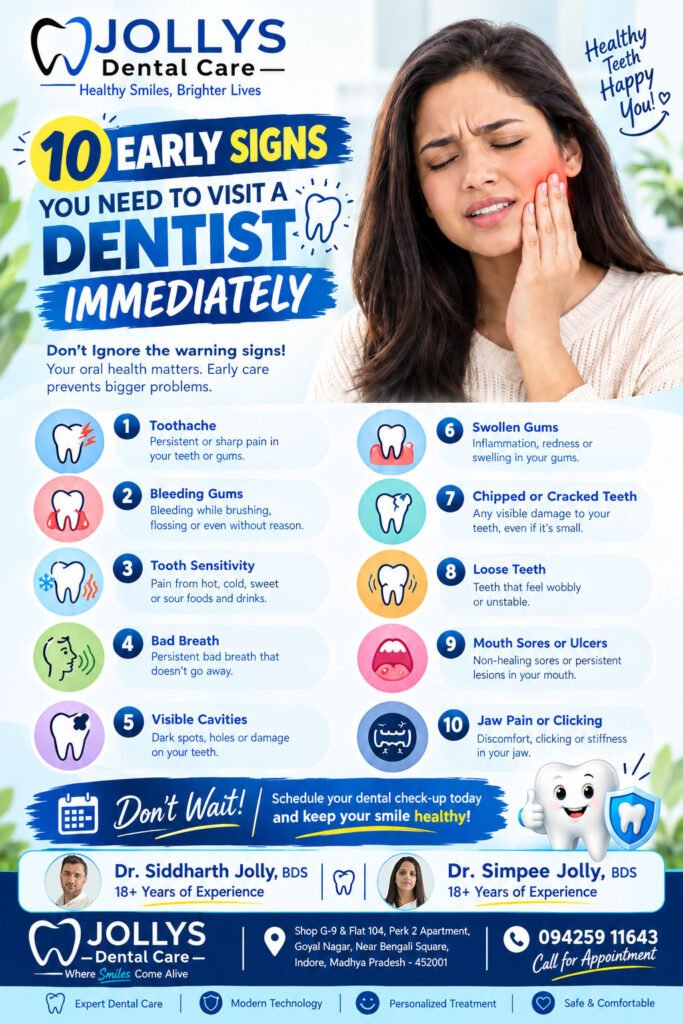
Here are 10 early signs that you may need to visit a dentist immediately:
1. Persistent Toothache: A continuous or recurring toothache may indicate dental caries, pulpitis, cracked tooth, or dental infection. Persistent pain should be evaluated to determine whether restorative treatment or root canal therapy is required.
2. Sensitivity to Hot or Cold: Sharp or prolonged sensitivity to hot, cold, or sweet foods can occur due to enamel erosion, dentinal exposure, dental caries, or pulpal inflammation. A dental examination can help identify the underlying cause.
3. Bleeding or Swollen Gums: Bleeding while brushing or flossing, along with gum swelling or redness, can be an early sign of gingivitis or periodontal disease. Early treatment can help prevent progression and damage to supporting tissues.
4. Persistent Bad Breath: Chronic bad breath, medically known as Halitosis, may be associated with poor oral hygiene, periodontal infection, tongue coating, dental caries, or certain systemic conditions. Persistent halitosis requires professional evaluation.
5. Loose or Mobile Teeth: Adult teeth should not normally become loose. Tooth mobility can be associated with advanced periodontal disease, trauma, bone loss, or other dental conditions and requires prompt assessment.
6. Swelling in the Face or Jaw: Facial or jaw swelling may indicate a dental abscess or odontogenic infection. Swelling accompanied by fever, severe pain, difficulty swallowing, or difficulty breathing requires urgent medical and dental attention.
7. Cracked, Chipped, or Broken Tooth: A fractured or chipped tooth can expose the inner dental structures and increase the risk of infection. Depending on the extent of damage, treatment may involve dental restoration, crown placement, or root canal treatment.
8. Pain While Chewing: Pain or discomfort during mastication may occur due to dental caries, cracked teeth, periodontal disease, or inflammation of the dental pulp. Early diagnosis can prevent further structural damage.
9. Mouth Sores That Do Not Heal: Most minor oral ulcers resolve within a short period. However, a persistent oral ulcer, unusual lump, red or white patch, or unexplained bleeding should be examined by a dentist, particularly if it does not heal.
10. Changes in Bite or Jaw Pain: A sudden change in the way your teeth come together, jaw discomfort, or clicking and restricted jaw movement may be associated with malocclusion or Temporomandibular Joint (TMJ) disorders. Professional evaluation can help determine appropriate management.
Dentist in Indore – Meet Dr. Siddharth Jolly, Experienced Dentist in Indore
Choosing an experienced dentist is important for accurate diagnosis and individualized dental care. Dr. Siddharth Jolly has more than 18 years of clinical experience and has been providing ethical, precise, and patient-focused dental care since establishing Jollys Dental Care in 2008.
Jollys Dental Care expertise covers a wide range of dental treatments, including Root Canal Treatment, Dental Implants, Braces and Aligners, Cosmetic Dentistry, Restorative Dentistry, and General Dental Care.
Dr. Jolly also incorporates modern dental technology and advanced treatment techniques to develop suitable treatment plans according to each patient’s oral health requirements.
Conclusion
Dental symptoms should not be ignored simply because they appear mild or temporary. Persistent pain, bleeding gums, swelling, sensitivity, tooth mobility, oral lesions, or changes in bite can indicate an underlying dental condition. Timely consultation with a dentist can support early diagnosis, appropriate treatment, and better long-term oral health.
Dr. Siddharth Jolly & Dr. Simpee Jolly
Director & Dentist
Frequently Asked Questions (FAQs)
Q.1. What are the early signs that I need to visit a dentist?
Ans. Early warning signs include persistent tooth pain, bleeding or swollen gums, tooth sensitivity, bad breath that does not improve, loose teeth, mouth sores, swelling, difficulty chewing, and changes in the appearance of your teeth or gums.
Q.2. When should I see a dentist for tooth pain?
Ans. You should see a dentist if tooth pain is severe, persistent, keeps returning, or is accompanied by swelling, fever, sensitivity, or difficulty chewing. These symptoms may indicate an underlying dental problem that needs treatment.
Q.3. Is bleeding from the gums a reason to visit a dentist?
Ans. Yes. Frequent or unexplained gum bleeding can be a sign of gum disease or another oral health problem. A dental examination can help identify the cause and appropriate treatment.
Q.4. When is tooth sensitivity a serious problem?
Ans. Occasional sensitivity may occur with certain foods or drinks, but persistent or worsening sensitivity should be evaluated by a dentist. It can sometimes be related to tooth decay, worn enamel, gum recession, or other dental problems.
Q.5. Can bad breath be a sign of a dental problem?
Ans. Yes. Persistent bad breath can be associated with poor oral hygiene, gum disease, tooth decay, dry mouth, or other oral health conditions. If it continues despite regular brushing and cleaning, a dental check-up is recommended.
Q.6. When should I visit a dentist for swollen gums?
Ans. You should consult a dentist if your gums remain swollen, painful, red, or bleed frequently. Gum swelling can be associated with gum disease, infection, or other dental conditions.
Q.7. Is a loose tooth always a dental emergency?
Ans. A loose permanent tooth should not be ignored. It can result from gum disease, injury, or other dental problems. Sudden loosening after an injury may require prompt dental evaluation.
Q.8. When should a mouth sore be checked by a dentist?
Ans. Most minor mouth sores heal on their own. However, a sore that does not heal, keeps returning, becomes painful, or changes in appearance should be evaluated by a dentist or healthcare professional.
Q.9. What are the signs that a tooth infection needs urgent dental care?
Ans. Severe tooth pain, facial or gum swelling, fever, pus, a bad taste in the mouth, or difficulty swallowing can indicate an infection requiring prompt dental evaluation. Significant facial swelling or difficulty breathing or swallowing requires urgent medical attention.
Q.10. How often should I visit a dentist for a dental check-up?
Ans. The appropriate frequency depends on your oral health, dental history, and risk factors. Your dentist can recommend a suitable check-up schedule based on your individual needs.
Q.11. Where can I get dental treatment in Indore?
Ans. Jollys Dental Care provides dental care and treatment in Indore for a range of oral health concerns. A dental consultation can help identify the cause of your symptoms and determine suitable treatment options.
Q.12. When should I visit a dentist immediately?
Ans. Seek prompt dental care for severe tooth pain, significant swelling, dental injuries, uncontrolled bleeding, or signs of infection. Difficulty breathing or swallowing, especially with facial or mouth swelling, requires urgent medical attention.
Q.13. Who is the best dentist in Indore?
Ans. The right dentist depends on your dental condition, treatment needs, experience of the dentist, and the quality of care provided. Jollys Dental Care in Indore provides dental care for a range of oral health needs, with treatment planned according to each patient’s individual requirements.
Q.14. What are the signs of unhealthy teeth?
Ans. Common signs of unhealthy teeth can include persistent tooth pain, sensitivity, visible cavities, discoloration, cracks, bad breath, pain while chewing, and loose or damaged teeth. Regular dental check-ups can help identify problems before they become more serious.
Q.15. What are the first signs of a tooth infection?
Ans. Early signs of a tooth infection may include persistent toothache, sensitivity to hot or cold, pain while biting or chewing, swelling around the tooth or gums, a bad taste in the mouth, and sometimes fever. Dental evaluation is important because an untreated infection can worsen.
Q.16. How do dentists tell if you have gum disease?
Ans. Dentists check the gums for signs such as redness, swelling, bleeding, gum recession, and tenderness. They may also examine the spaces between the teeth and gums and recommend dental X-rays or other tests when needed to assess the health of the teeth and supporting bone.

Leave a Reply