
How to Prevent Tooth Decay: Daily Oral Care Tips from a Dentist
What Is Tooth Decay?
Tooth decay is one of the most common dental problems and can affect people of all ages. It occurs when bacteria in the mouth break down sugars from food and produce acids that gradually damage the tooth enamel.
If this process continues without proper care, it can lead to cavities, tooth sensitivity, pain, infection, and eventually tooth loss.
Poor oral hygiene, frequent consumption of sugary foods and drinks, inadequate fluoride exposure, dry mouth, and irregular dental check-ups can increase the risk of tooth decay. The good news is that maintaining a consistent oral care routine can significantly reduce this risk.
How to Prevent Tooth Decay
Preventing tooth decay begins with simple daily habits. Brushing your teeth twice a day with fluoride toothpaste is one of the most important steps. Use a soft-bristled toothbrush and brush gently for about two minutes, making sure to clean the front, back, and chewing surfaces of your teeth.
Flossing or cleaning between the teeth once a day is equally important. A toothbrush cannot effectively reach all the areas between teeth, where food particles and plaque can accumulate.
It is also advisable to limit sugary snacks, sweets, soft drinks, and other foods or beverages that contain added sugars. Frequent exposure to sugar gives harmful bacteria more opportunities to produce acids that attack tooth enamel.
Drinking water throughout the day can help wash away food particles and support saliva production. If possible, avoid continuously sipping sugary or acidic beverages throughout the day.
Regular dental examinations and professional cleaning can also help detect early signs of decay before they become more serious. Your dentist may recommend additional preventive measures, such as fluoride treatments or dental sealants, depending on your individual oral health needs.
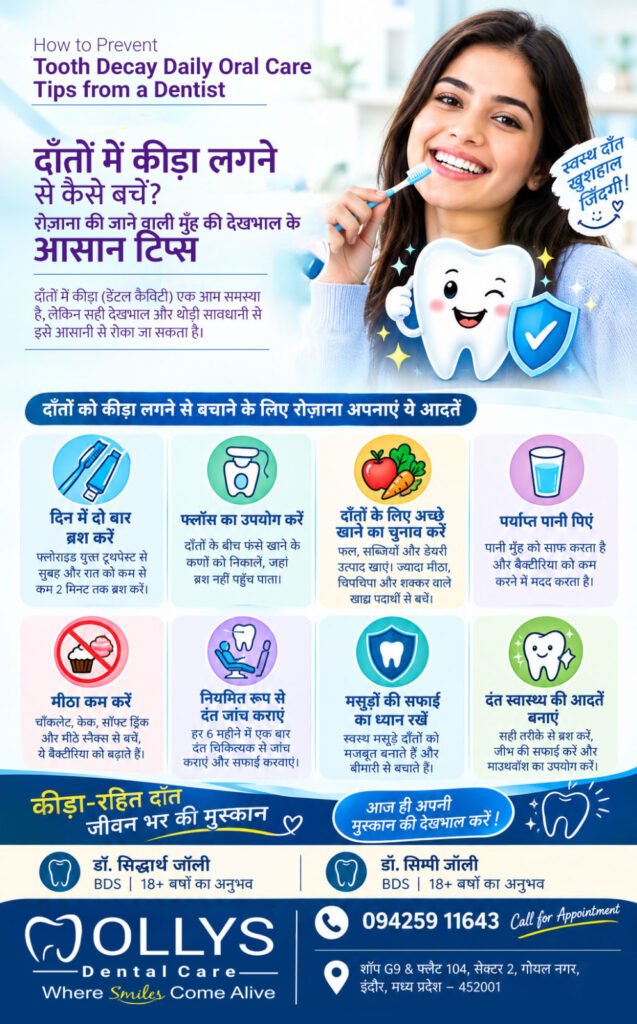
Daily Oral Care Tips from a Dentist
For better daily oral health, patients should:
- Brush twice daily with fluoride toothpaste.
- Clean between teeth daily using floss or an appropriate interdental cleaner.
- Limit sugary and acidic foods and beverages.
- Drink plenty of water.
- Avoid using tobacco products.
- Replace your toothbrush when the bristles become worn.
- Visit your dentist regularly for examinations and professional cleaning.
Children, adults, and older individuals may have different dental needs, so oral care should be tailored to the individual’s condition. If you experience toothache, sensitivity, visible spots or holes in a tooth, bleeding gums, or persistent bad breath, a dental examination is recommended.
At Jollys Dental Care, we provide personalized dental care to help you maintain healthy teeth and a confident smile. We focus on preventive dentistry and encourages patients to develop healthy oral care habits from an early age.
Conclusion
Tooth decay is largely preventable when good oral hygiene and healthy lifestyle habits are followed consistently. Brushing twice a day, cleaning between teeth, limiting sugar, drinking water, and attending regular dental check-ups can help protect your teeth and gums.
If you notice any symptoms of tooth decay, seeking professional dental care early can help prevent the problem from progressing and support long-term oral health.
At Jollys Dental Care, Dr. Siddarth Jolly takes a personalized and preventive approach to dental care, helping patients understand the importance of maintaining good oral health and addressing dental concerns at an early stage.
His patient-focused approach and emphasis on proper dental hygiene make him a trusted choice for individuals and families seeking professional dental care in Indore.
Regular guidance from an experienced dentist like Dr. Siddarth Jolly can help patients maintain healthier teeth, prevent avoidable dental problems, and enjoy a confident smile for years to come.
Dr. Siddharth Jolly & Dr. Simpee Jolly
Director & Dentist
Frequently Asked Questions (FAQs)
Q.1. How can I prevent tooth decay?
Ans. You can help prevent tooth decay by brushing your teeth twice a day with fluoride toothpaste, cleaning between your teeth daily, limiting sugary foods and drinks, and visiting your dentist regularly for check-ups.
Q.2. How often should I brush my teeth to prevent cavities?
Ans. Brush your teeth twice a day for about two minutes each time. Use a soft-bristled toothbrush and fluoride toothpaste, and make sure you clean all surfaces of your teeth.
Q.3. Is brushing enough to prevent tooth decay?
Ans. Brushing is important, but it is not enough on its own. Cleaning between your teeth with floss or another suitable interdental cleaning method helps remove plaque and food particles from areas a toothbrush may not reach.
Q.4. Does flossing help prevent cavities?
Ans. Yes. Regular cleaning between the teeth can help remove plaque and food particles from areas that are difficult to clean with a toothbrush, which can help reduce the risk of tooth decay and gum problems.
Q.5. What foods should I avoid to prevent tooth decay?
Ans. Limit frequent consumption of sugary foods and drinks, including sweets, chocolates, sugary beverages, and sticky snacks. Eating sugary foods less frequently and maintaining good oral hygiene can help reduce the risk of tooth decay.
Q.6. Can tooth decay be prevented completely?
Ans. Good oral hygiene, a balanced diet, fluoride exposure, and regular dental check-ups can significantly reduce the risk of tooth decay. However, no method can guarantee that cavities will never develop.
Q.7. What are the early signs of tooth decay?
Ans. Early tooth decay may not cause noticeable symptoms. Possible signs include white or brown spots on the teeth, tooth sensitivity, pain, or discomfort when eating or drinking. Regular dental examinations can help detect decay at an earlier stage.
Q.8. How often should I visit a dentist to prevent cavities?
Ans. The recommended frequency of dental visits depends on your oral health and individual risk factors. Your dentist can recommend an appropriate check-up schedule based on your needs.
Q.9. Can children get tooth decay even if they brush their teeth?
Ans. Yes. Children can still develop tooth decay due to frequent sugary foods or drinks, inadequate brushing, poor cleaning between teeth, or other risk factors. Regular dental check-ups and proper oral hygiene are important for children.
Q.10. Can fluoride toothpaste help prevent tooth decay?
Ans. Yes. Fluoride helps strengthen tooth enamel and can help prevent cavities when used as part of regular oral hygiene. Use fluoride toothpaste according to dental recommendations.
Q.11. Can a dentist detect tooth decay before it causes pain?
Ans. Yes. Dentists can identify early signs of tooth decay during a dental examination, even when there are no symptoms. X-rays may also be recommended when needed to check areas that cannot be examined directly.
Q.12. Where can I get treatment for tooth decay in Indore?
Ans. Jollys Dental Care provides dental care in Indore, including evaluation and treatment of tooth decay. A dental examination can help determine the extent of decay and the appropriate treatment.
Q.13. What kills decay in teeth?
Ans. Tooth decay cannot usually be “killed” with a home remedy once a cavity has formed. Early enamel damage may sometimes be managed or reversed with fluoride and good oral hygiene. If a cavity has developed, a dentist may need to remove the decayed portion and restore the tooth with an appropriate treatment.
Q.14. What is the No. 1 cause of cavities?
Ans. The main cause of cavities is plaque bacteria producing acids when they break down sugars and carbohydrates in food and drinks. Frequent exposure to these acids can weaken tooth enamel and eventually lead to tooth decay.
Q.15. What are 10 ways to keep my teeth healthy?
Ans. Ten simple ways to maintain healthy teeth are:
- Brush twice a day with fluoride toothpaste.
- Clean between your teeth daily.
- Limit sugary foods and drinks.
- Avoid frequent snacking on sugary foods.
- Drink plenty of water.
- Eat a balanced diet.
- Avoid tobacco products.
- Replace your toothbrush when it becomes worn.
- Visit your dentist for regular check-ups.
- Get dental problems treated early rather than ignoring symptoms.

Leave a Reply