
Toothache: Common Causes, Symptoms & When to See a Dentist
What Is Toothache?
Toothache is pain or discomfort in or around a tooth that may occur continuously or intermittently. It can range from mild sensitivity to severe pain that interferes with eating, speaking, and sleeping.
Toothache is a common dental problem that can affect people of all ages and may indicate an underlying issue requiring professional attention.
The pain may originate from the tooth itself, the surrounding gums, or other structures in the mouth. While temporary sensitivity can sometimes result from consuming hot or cold foods, persistent toothache may indicate tooth decay, infection, gum disease, or dental damage. Identifying the underlying cause is essential for receiving appropriate treatment and preventing complications.
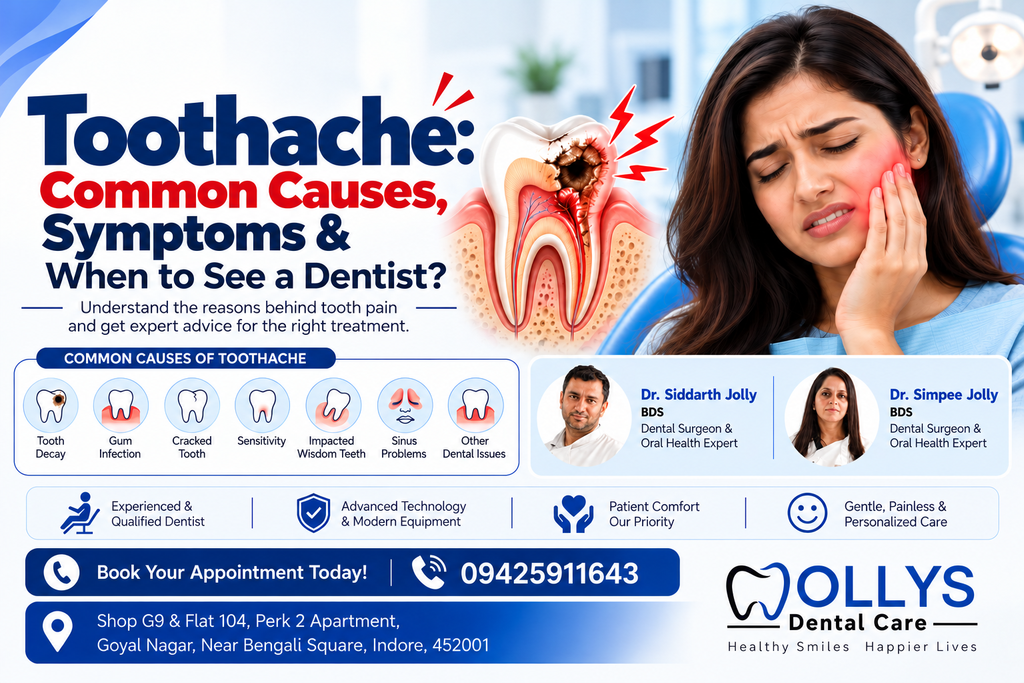
Toothache Causes
Toothache can develop for several reasons, depending on the condition of the teeth and gums. Some of the most common causes include:
1. Tooth Decay: Tooth decay occurs when bacteria in dental plaque produce acids that damage the tooth enamel. As the decay progresses into deeper layers, it may cause sensitivity and persistent pain.
2. Dental Abscess: A dental abscess is a collection of pus caused by a bacterial infection. It may cause severe, throbbing pain, swelling, fever, and discomfort while chewing. Prompt dental treatment is necessary to prevent the infection from spreading.
3. Gum Disease: Inflammation or infection of the gums can cause tenderness, bleeding, swelling, and discomfort around the teeth. Advanced gum disease may also damage the supporting structures of the teeth.
4. Cracked or Damaged Teeth: A cracked, chipped, or broken tooth can expose sensitive inner tissues, resulting in pain while biting or chewing.
5. Tooth Sensitivity: Worn enamel or receding gums can expose sensitive tooth surfaces, causing sharp pain when consuming hot, cold, sweet, or acidic foods.
Toothache Symptoms
Toothache symptoms can vary depending on the underlying dental problem, ranging from mild sensitivity to severe, persistent pain. Recognizing these symptoms early can help prevent complications and ensure timely dental treatment.
Common symptoms of toothache include:
- Sharp or Throbbing Tooth Pain: A person may experience sharp, shooting, or throbbing pain in the affected tooth. The pain may occur intermittently or remain constant, depending on the cause.
- Sensitivity to Hot and Cold Foods: Discomfort or sudden pain while consuming hot beverages, cold drinks, ice cream, or sweet foods may indicate tooth decay, worn enamel, or exposed dentin.
- Pain While Chewing: Pain or discomfort when biting or chewing food may indicate tooth decay, a cracked tooth, or inflammation around the tooth’s root.
- Swollen or Tender Gums: The gums surrounding the affected tooth may become red, swollen, or tender, particularly when an infection or gum disease is present.
- Facial or Jaw Swelling: Swelling around the cheek or jaw may indicate a dental infection or abscess that requires prompt professional evaluation.
When to See a Dentist?
A dental consultation is recommended when toothache persists for more than one or two days, becomes severe, or does not improve with basic care.
Pain accompanied by swollen gums, fever, pus, or difficulty chewing may indicate an infection requiring prompt treatment.
Dr. Siddharth Jolly at Jollys Dental Care provides patient-focused dental care with an emphasis on accurate diagnosis and appropriate treatment. With over 18 years of clinical experience, Dr. Jolly offers expertise in root canal treatment, dental implants, braces and aligners, cosmetic dentistry, restorative procedures, and general dental care.
Established in 2008, Jollys Dental Care combines modern dental technology with personalized treatment planning to address patients’ individual needs.
If facial or neck swelling causes difficulty breathing or swallowing, seek emergency medical care immediately.
Conclusion
Toothache should never be ignored, as it may indicate an underlying dental problem that can worsen without timely treatment. Maintaining good oral hygiene, brushing twice daily with fluoride toothpaste, flossing regularly, and attending routine dental check-ups can help reduce the risk of tooth decay and gum disease.
For individuals experiencing dental pain, Dr. Siddharth Jolly and Jollys Dental Care offer experienced, ethical, and patient-focused dental care. With extensive clinical experience and a commitment to modern treatment techniques.
Dr. Jolly strives to provide suitable dental solutions that support long-term oral health and confident smiles. Seeking timely professional care can help preserve natural teeth and prevent avoidable complications.
Frequently Asked Questions About Toothache
Q.1. What are the common causes of toothache?
Ans. Common causes of toothache include tooth decay, cavities, gum disease, cracked teeth, dental infections, wisdom tooth problems, and tooth sensitivity. A dental examination can help identify the exact cause.
Q.2. When should I see a dentist for a toothache?
Ans. You should see a dentist if tooth pain persists, keeps returning, or affects eating and sleeping. Seek urgent dental care if you experience severe pain, facial swelling, fever, or signs of infection.
Q.3. Can a toothache go away on its own?
Ans. Mild tooth pain may temporarily improve, but the underlying cause may remain. Persistent or recurring pain should be evaluated by a dentist to prevent the problem from worsening.
Q.4. Can tooth decay cause severe tooth pain?
Ans. Yes. Tooth decay can cause sensitivity and pain, especially when it reaches the deeper layers of a tooth. Advanced decay may affect the dental pulp and require treatment such as a root canal.
Q.5. Why does my tooth hurt when I eat or drink something cold?
Ans. Tooth sensitivity can occur due to worn enamel, receding gums, cavities, or cracks in a tooth. If the sensitivity persists or becomes painful, consult a dentist.
Q.6. Can a tooth infection cause swelling and fever?
Ans. Yes. A dental infection can cause tooth pain, gum or facial swelling, a bad taste in the mouth, and sometimes fever. Seek urgent dental care if these symptoms occur. Difficulty breathing or swallowing requires emergency medical attention.
Q.7. Can gum disease cause toothache?
Ans. Yes. Gum disease may cause tender, swollen, or bleeding gums and can sometimes lead to discomfort or loose teeth. A dentist can assess your gum health and recommend appropriate treatment.
Q.8. Does a toothache always mean I need a root canal?
Ans. No. Treatment depends on the cause and severity of the problem. Some cases may need a filling or treatment for gum disease, while a root canal may be necessary if the tooth’s pulp is irreversibly damaged or infected.
Q.9. When is a toothache considered a dental emergency?
Ans. Severe or rapidly worsening tooth pain, facial swelling, fever with dental pain, or swelling that spreads needs urgent dental assessment. Difficulty breathing or swallowing is a medical emergency.
Q.10. How can I prevent toothache?
Ans. Brush twice daily with fluoride toothpaste, clean between your teeth every day, limit sugary foods and drinks, and visit a dentist regularly. Early treatment of cavities and gum problems can help prevent more serious dental issues.
Q.11. Where can I get dental treatment for a toothache in Indore?
Ans. You can contact Jollys Dental Care in Indore for an examination and advice about tooth pain. The appropriate treatment depends on the cause of the toothache and your individual dental condition.
Q.12. How many days of toothache before seeing a dentist?
Ans. You should contact a dentist if your toothache lasts more than 1–2 days, keeps returning, or gets worse. Seek urgent dental care for severe pain, facial swelling, fever, or signs of infection. Do not wait if symptoms are serious.
Q.13. What is the 3-3-3 rule for toothache?
Ans. The “3-3-3 rule” is sometimes used online to describe taking pain medication at set intervals, but it is not a universally accepted dental treatment guideline. Taking painkillers too frequently or in excessive doses can be harmful. Follow the medicine label and your healthcare professional’s advice, and consult a dentist to identify the cause of toothache.
Q.14. How to tell if a toothache is serious?
Ans. A toothache may indicate a serious problem if you experience severe or persistent pain, pain when biting, swollen gums or face, pus, fever, or a bad taste in your mouth. Seek urgent dental care if these symptoms occur. Difficulty breathing or swallowing requires emergency medical attention.
Q.15. What is mistaken for a toothache?
Ans. Pain from sinus infections, jaw joint problems, teeth grinding, or nerve-related conditions can sometimes feel like a toothache. Sinus-related pain may affect several upper teeth, while jaw problems may cause pain near the ear. A dental examination can help determine the actual source of the pain.

Leave a Reply